The Plates
Cuts and engravings from the Parish presses, kept as they were pulled. Click any plate to view it at large.
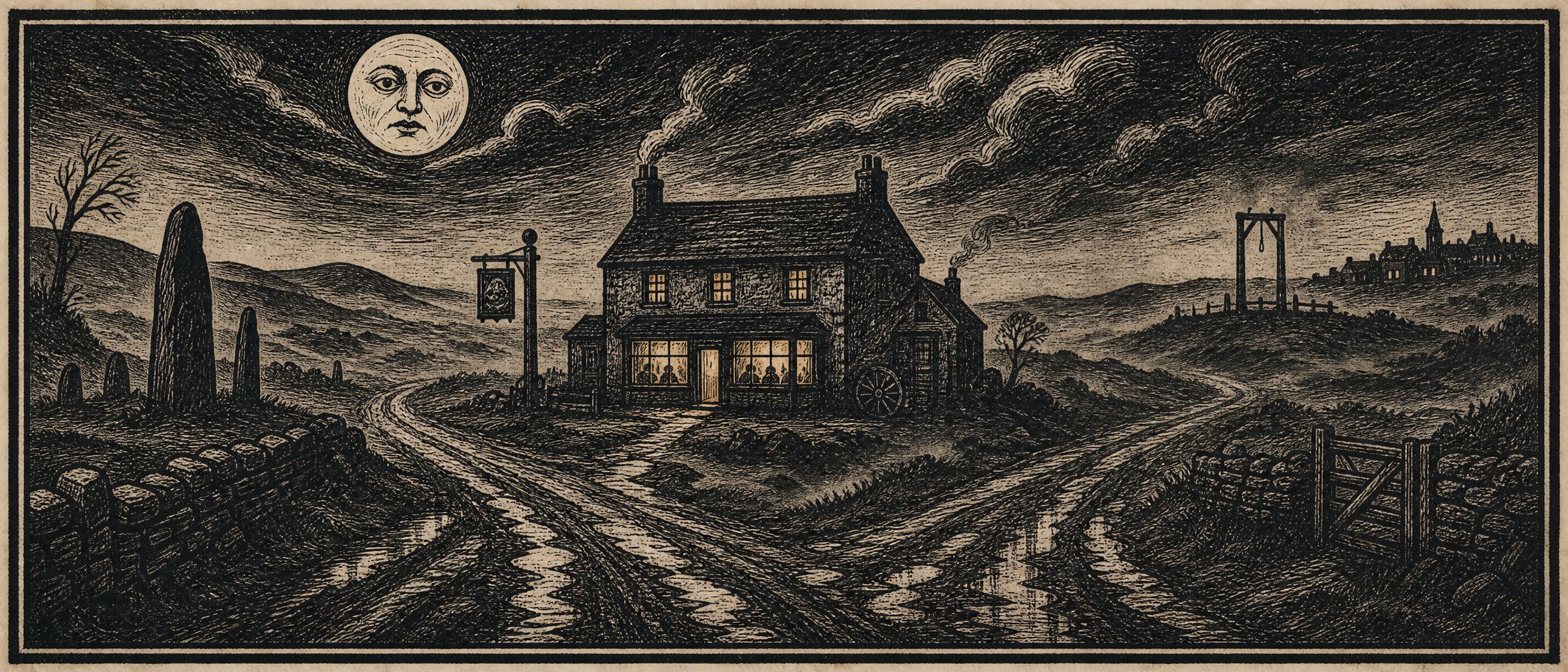
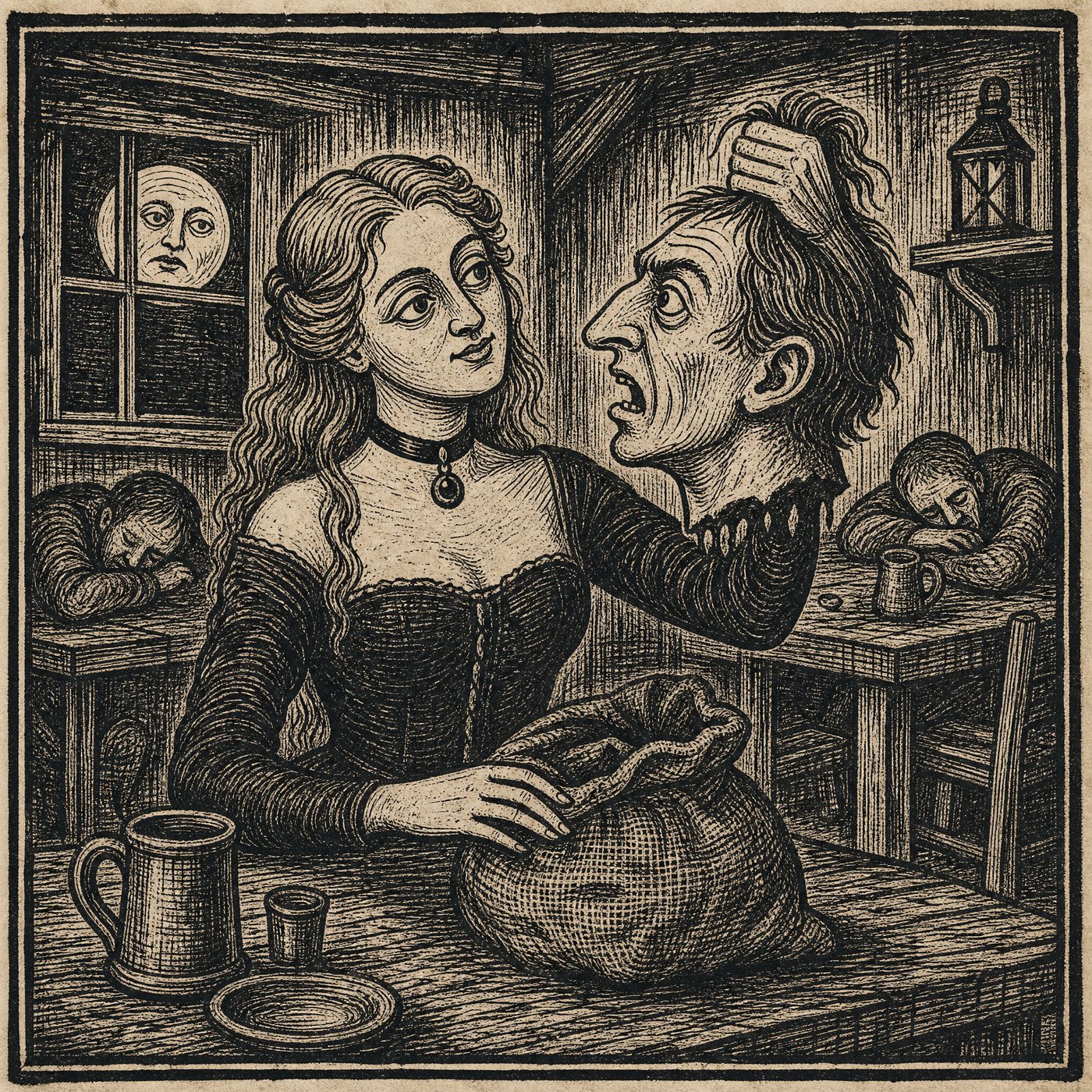
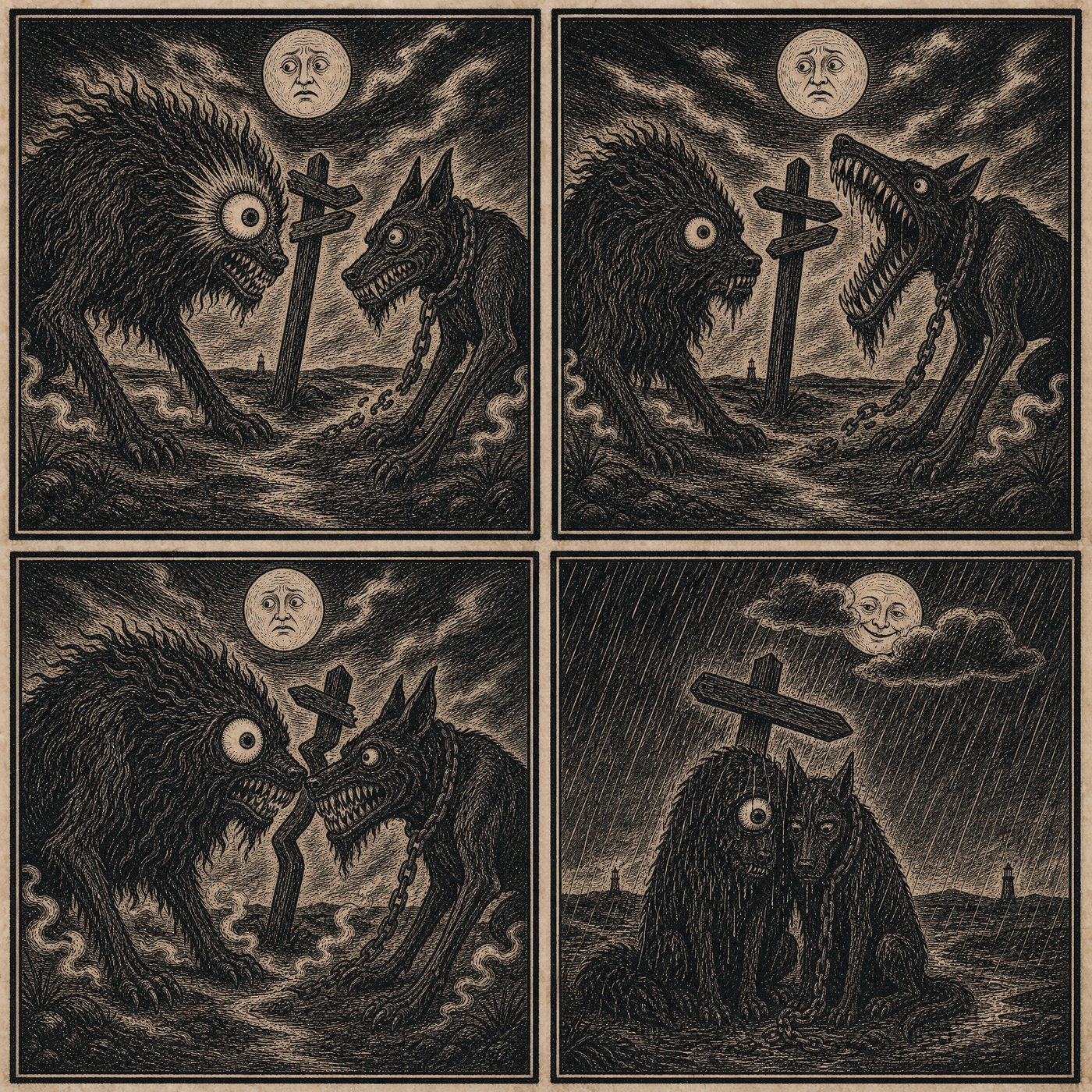
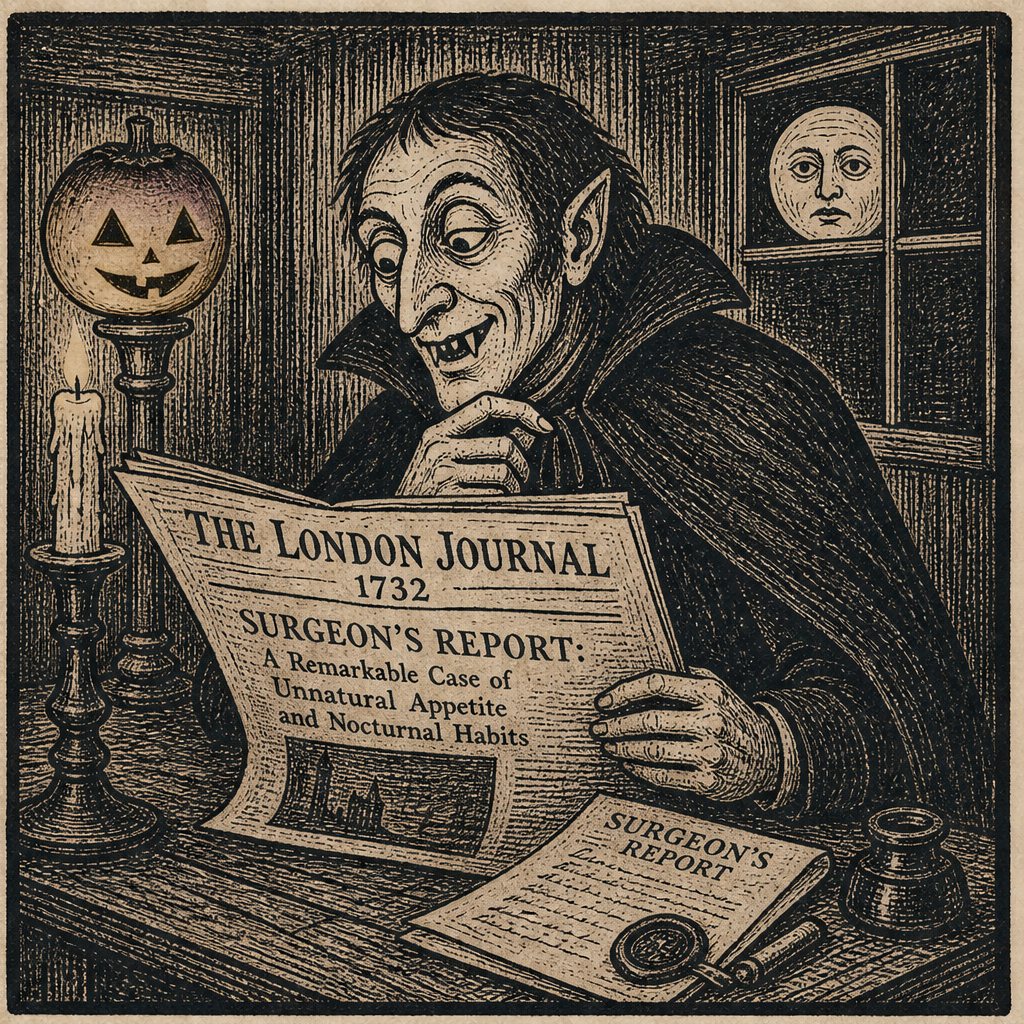
Before he was our neighbour, he was news.
The vampire has no ancient legend. His birth certificate is a newspaper — the year 1732, a surgeon's report attached, signed. The parish laughed for four years. Then the law changed, and he applied for a licence, and the laughing stopped.
See the Register: VAM-1, in good standing.
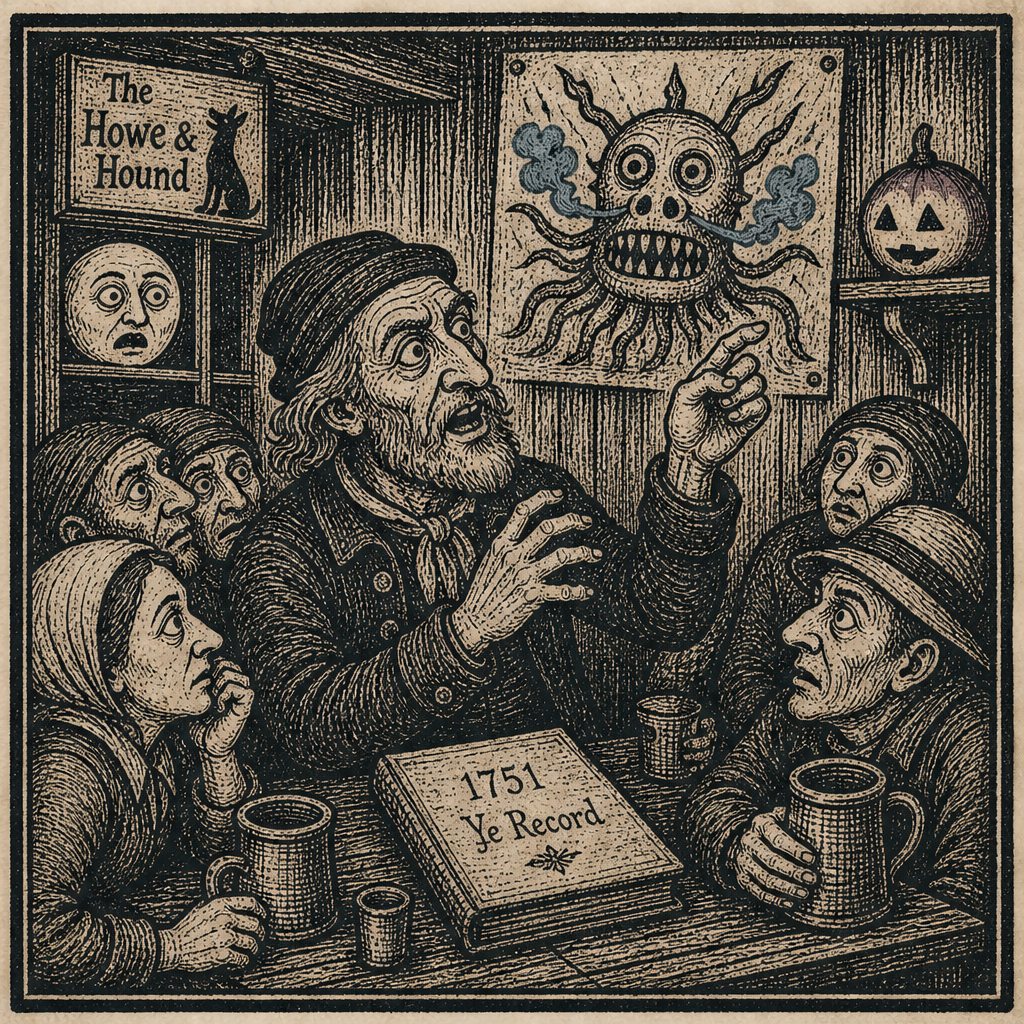
A sailor home from the sea gave his account at the Howe & Hound, and the Register took it down.
His face, the man swore, was never the creature the ballads draw. Round eyes. Three rows of teeth. Blue smoke at the nostrils. And he lived in the rigging, close overhead, the whole voyage long.
The rigging, the sailor said, was always the frightening part.
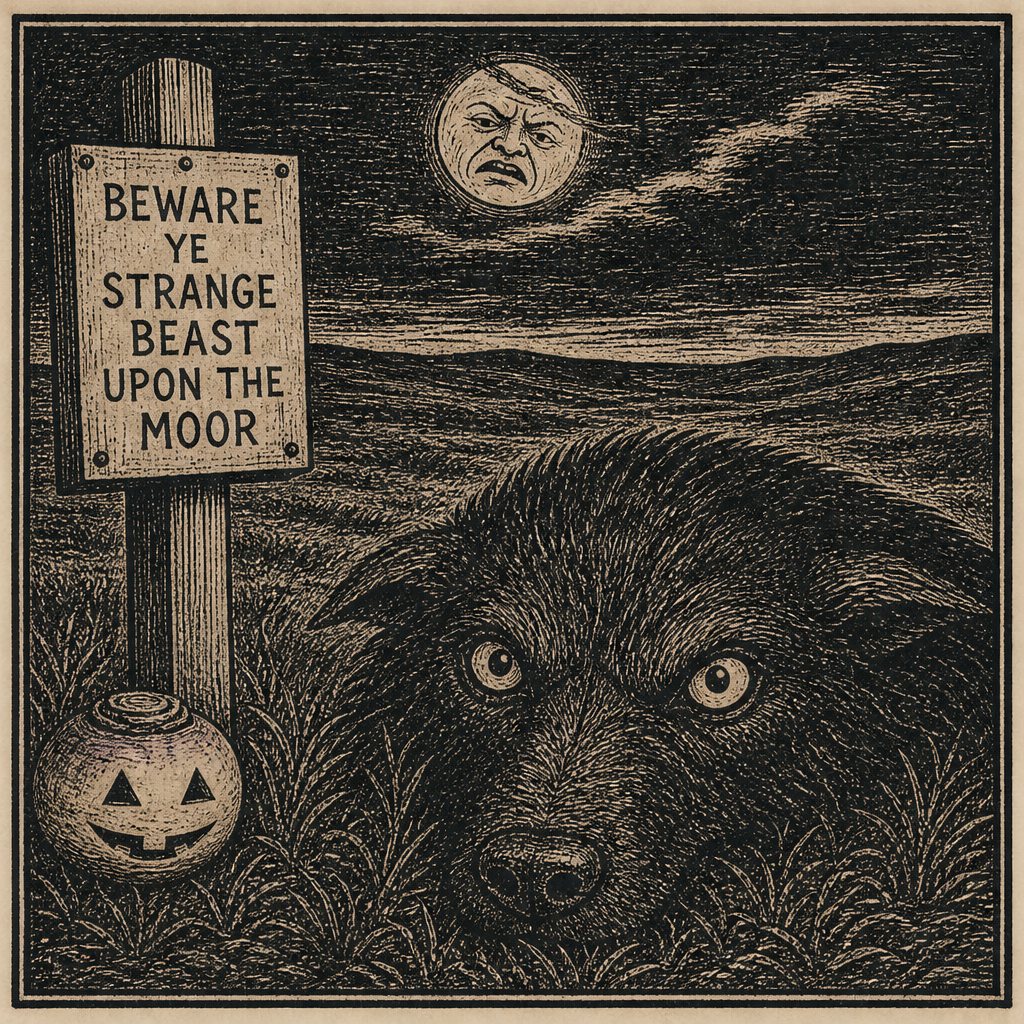
A notice, posted on the moor road by order of the parish.
The hounds of the otherworld grow QUIETER as they draw near. This is not opinion; it is the one point on which every survivor agrees. When you can no longer hear them, do not stop to listen harder.
Look up. Then run, if there is time, which there is not.
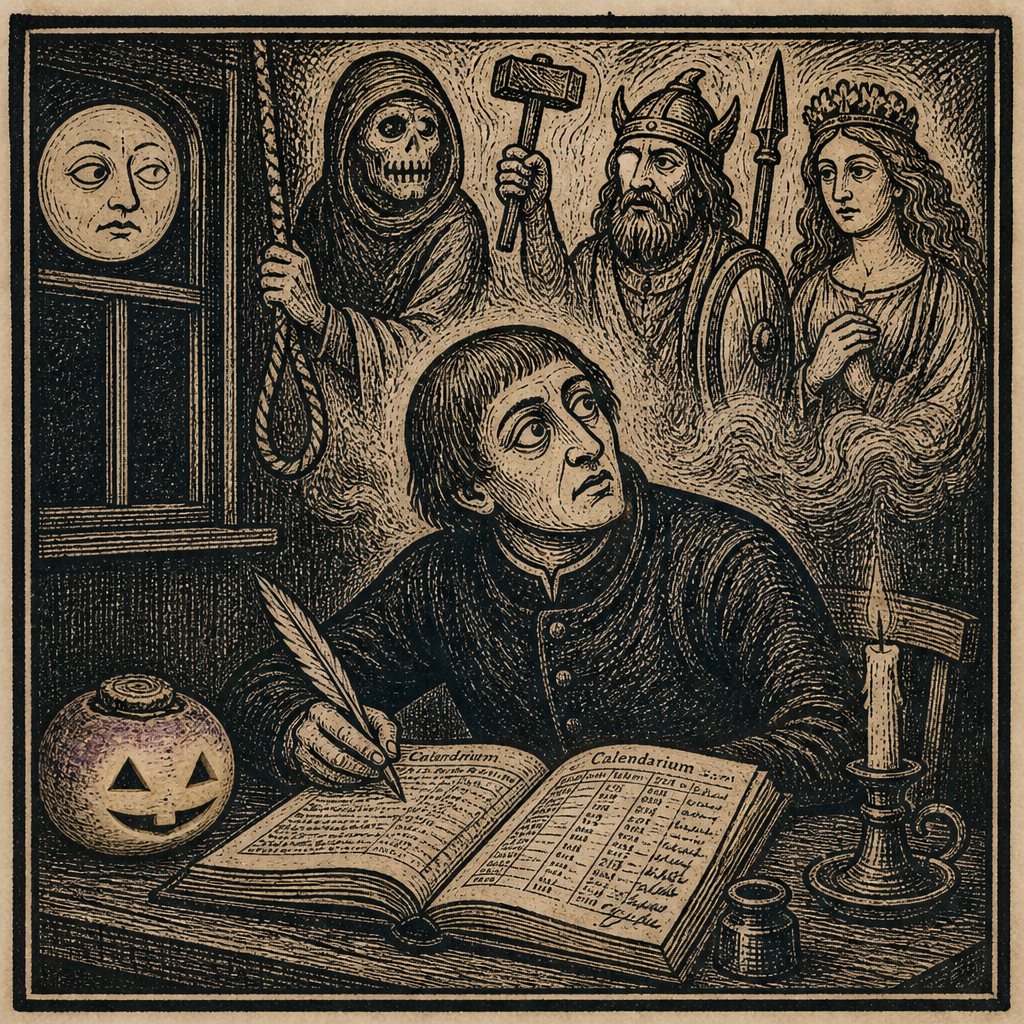
A marginal note, in the clerk's own hand, found in the parish almanac.
"It occurs to me, entering these creatures day by day, that the days themselves are named for the old gods. Tiw, on a Tuesday. Thunor, on a Thursday. Frig, on a Friday.
As for the Wednesday god — I have been advised, in this office, which names we do not write out in full. I leave the reader to say it, if the reader dares. I honour four gods a week, and name only three."
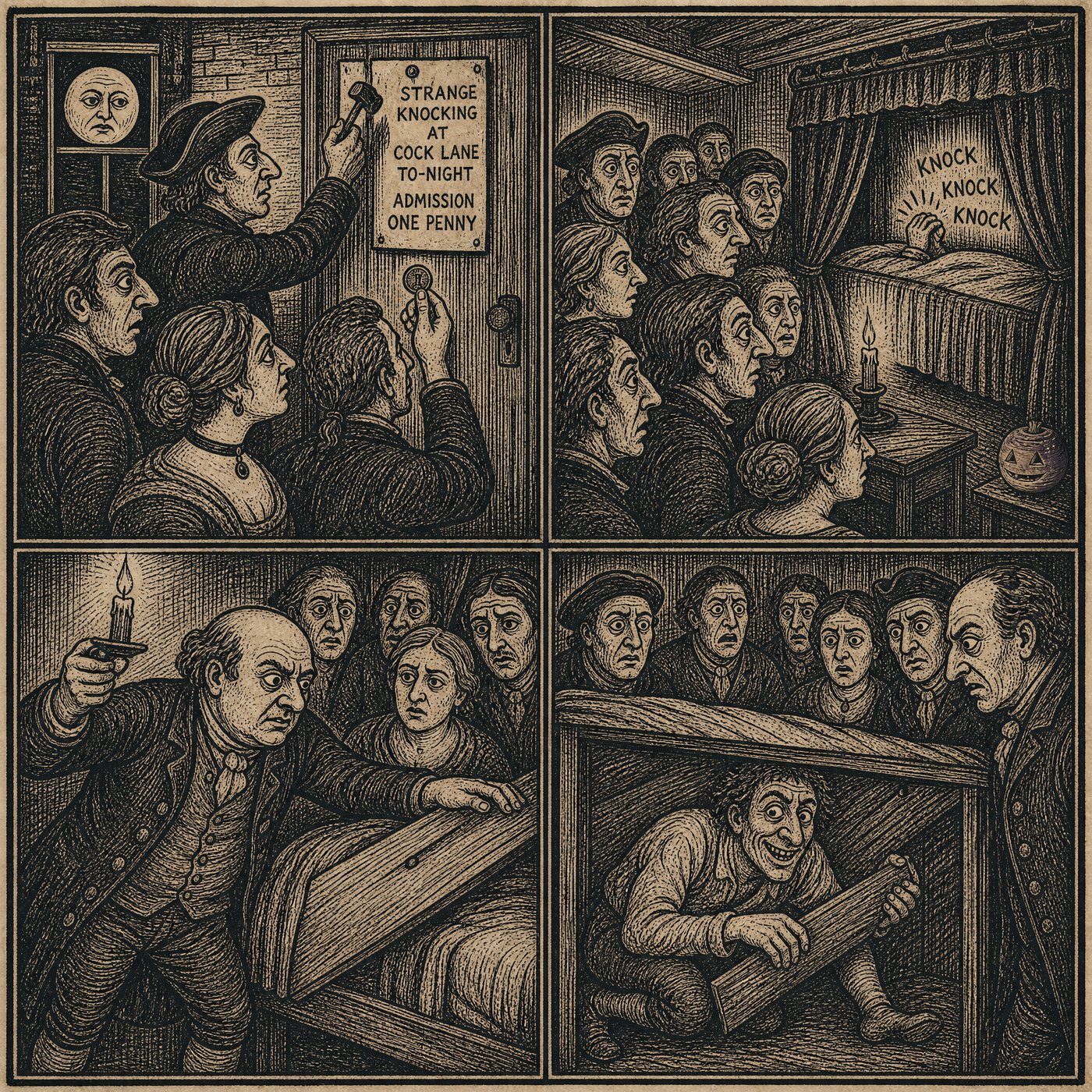
The Register notes, drily, that a true haunting need not sell tickets. Only the false ones want your penny. The ghost, it turned out, wanted money. They usually do.